Pip: If you’ve ever wondered what a sacred space for fatherhood would look like — complete with symbolic architecture, color theory, and a brass captain’s wheel — Dr. Jen Wyman-Clemons, MD has been receiving downloads, and she wrote them all down.
Mara: This episode follows one post deep into the territory of masculine identity, sacred space, and what it might mean to build a place where men can actually defuse, ground, and recenter. Let’s start with the Church of Fatherhood itself.
Church of Fatherhood
Mara: The post opens with a frank admission — this is written from the outside, by someone who is not a man, drawing on observations from restaurants, libraries, and doctor’s lounges. The question it’s trying to answer is: what would a physical and symbolic space for fatherhood actually look like, and what would it do for the men inside it?
Pip: The name itself gets unpacked letter by letter. Here’s the line that sets the whole framework: “It’s named a ‘church’ because Chet is in the word which reminds us to focus on the goals of a bigger picture which is our personal ‘mission’ and dharma.”
Mara: So the naming isn’t decorative — it’s load-bearing. Each letter carries a meaning: the bridge between realities, the reaching toward another materially, the continuous return. The word is a compressed instruction manual.
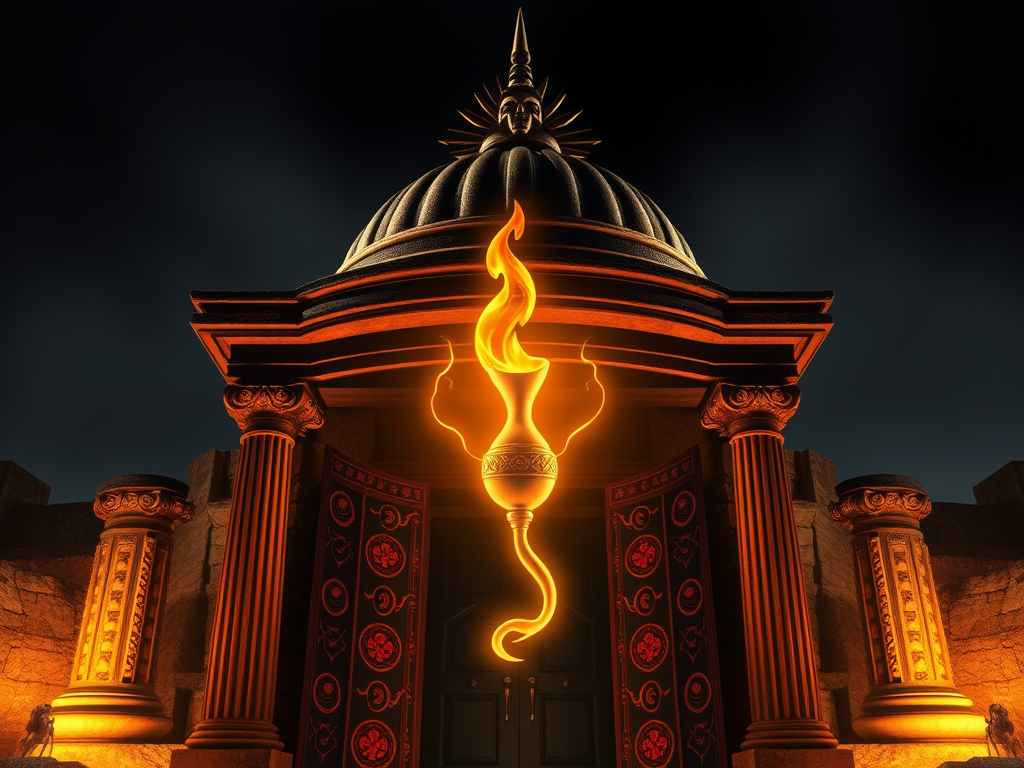
Pip: And from there the post builds the architecture out in full. The entrance is dome-shaped with a spike, the logo is explicitly phallic and explicitly uncircumcised — the post has opinions about circumcision that are worth noting, essentially arguing it should be a consenting adult’s pleasure-based decision, not a religious obligation.
Mara: The physical design keeps carrying symbolic weight throughout. The roof is green verdigris, described as blessed by copper and symbolic of Venus’s relationships. The walls are mahogany with black vertical stripes laced with blue sapphire and lapis. The carpet is deep green. And the whole space is sound-proofed — the post notes that breathing automatically slows when you step inside.
Pip: There’s a captain’s wheel at the entrance you’re invited to spin. Honestly, that detail lands better than most corporate wellness programs.
Mara: The murals in the main room are where the post gets most explicit about purpose. Mountains on every wall, rivers flowing from each range — and the post explains: “Rivers represent the feelings we have about our situations. They flow, they continue, they pass.” The back wall shows a view of being a peak among equals, no one taller than another.
Pip: The post also addresses who the space is for — men with living penises, with open hours on Wednesdays and Sundays for youth and families. There’s a practical side too: exhibits on contraception, on testosterone changes with age, possibly astrology consultations for event planning.
Mara: The deeper argument underneath all of it is about glandular range. The post suggests men have been culturally rewarded for one emotion — rage — and that most other secretory and neurohormonal pathways remain underdeveloped as a result. The temple is partly a place to expand that range without the dopamine-adrenaline loop of gyms or bars.
Pip: The post closes with an invitation: “Please let me know if I’ve left anything non sex-based out that’s important — sex and romance gets its own important place.” A sequel is implied.
Mara: What runs through all of it is the idea that masculine identity needs a designed container — not to dominate, but to quiet down enough to hear itself.
Pip: Sacred architecture, letter-by-letter etymology, and a brass captain’s wheel — there’s a lot of symbolic infrastructure being laid here.
Mara: The through-line is space as instruction: what you build shapes what’s possible inside it. More of that thinking ahead.