{Snow as Metaphor}
As a metaphor for crystallized water, so are entities from crystalized summation of feelings. Experiences lands on each of us differently. Snow as ideas and thoughts built around a core of words, will melt and change when sun shines with new evidence; meanwhile snow blocks us from clarity.
Some receive snow more gracefully; others let it pile- till their structure collapses. Usually snow lands most heavily, on horizontal surfaces. This is analogous to people who depend on others, instead of looking to their inner sun.
Like buildings, no two trees are ever the same even if from a distance, they seem so.
Tall and slim, or wide with branches, snow, like opportunity, is received by each differently. How it lands, depends inherently on the surface.
It reminds me of the differences between the deciduous versus evergreen bough’s branches. Deciduous trees are at their most beautiful in summer when leafy; we chose them for their season, even if they’re short.
Deciduous trees, shed their cover as soon as sun’s light falters. Theirs is a magnificent temporal beauty. They require cyclic resting.
Without leaves, they no longer make chlorophyll or oxygen which serve to heal and inspire. As their bareness stands out from snow’s fog and winter’s gray skies, people call them ugly during this time.
As snow lands on those skeletal branches, they collect snow sparingly. As white layers atop them, branches are seen as silvery outlines. Regardless of whether line or blizzard, they receive only a shining mantle adorning them in their dormancy. They are a pun of themselves – nothing but a sliver of self.
While a fraction of snow lands along their boughs, that within their canopy collects along those bare branches. Most snow falls straight to the ground to turn into slush- and feed roots underground.
With a deciduous tree, ice can get them. With ice build up, branches get over-weighted and snap rather than bend gracefully. Add wind (representing changes in one’s world of ideas- hence ‘the intellect’), and the process is exacerbated.
*
Conifers on the other hand, stand through winter tall and green. They shed their bunches of needle leaves a little bit continuously not limited like the deciduous with its seasons.
Snow builds up on them. Wearing white, their outline is more uniform. While blanketed, they maintain their deep inner dry space. Here you’ll find protection for little critters. With the evergreen trees, you never get to see its skeleton. (Thank you for this image, Jeff Keane!)
Quietly weighted down with accumulation, they contract. As the air warms up and snow melts, it slides off en masse- freeing the south face first.
Sitting quietly, I’m startled when a big pouf of snow falls down off the cypresses standing just outside my window.
On these trees, the snow builds up, until thwump, it falls. Then a load might fall on you- if you’re standing close by!
Releasing weight, the newly lightened branch springs up freeing itself further with its jostle. That jostle sheds snow further.
What comes next, slight or accelerated loosening, helps the process of abscission and letting go of stuff.
As energy is transferred to tree’s trunk, this destabilizes the rest of snow that’s accumulated.
Stay back while it is happening! Or you’ll get snow right down your back, and Brrr! That is no one’s favorite.
Outstretched to the heavens they are freed to slowly respire despite the dim light.
Boughs offer themselves laterally- support the resilience of a tree’s close relatives as it once again bears unweighted against the prevailing wind.
Deciduous trees alas, can’t do that; they aren’t a fence or wall deflecting wind seven times its height and ~twice it’s width. Wind goes through or makes them snap; they need extra protection to survive a hardy climate.
[Mitochondrial beings, such as deciduous trees, have strong predetermination of what they l’ove and want to do- to optimize their body’s sense of thriving. Thriving is being alive with pizazz.- Give them basics of education from perspective of then turn them loose into the real world of using hearts and hands.
- As activities of daily living are inevitable, teach how to celebrate them!
- Either boys or girls can be more deciduous than evergreen – so approach all hu(e)-mans as equals. Evergreens -less ‘determinate’ individuals may need to, in addition to the above, explore more – becoming mentors and guides for example.
- All sentient beings, including mammals and amphibians are their version of ‘tree’ self- and not less than (though they may ‘act’ like it.)]
{Evaluating the Pedagogic Model of Education}
What is equal opportunity? Is it giving everyone the same chance? Teaching them the same things? Or is it providing training that helps them shine individually?
Listening to the teacher, each student technically receives the same information- because they are present.
But wait, it turns out our senses and how we consciously receive and process, are each on their own bell curve. Some hear some words better than others – depending on differences in dialects; tones and intonation are different channels.
For those that look most like the teacher, it will be ~easier to identify with him (or her). Sharing languages, his speech will be first nature. These students may come home and say how great this particular teacher feels like for them; that they are ‘inspired’ to be in his/her class. They don’t struggle to interpret nuanced sayings or have to humble themselves to ask someone what an inside joke means.
What is heard depends on differences of home’s language versus school’s language. And/ or maybe someone didn’t sleep well last night, or had a family urgency where all the collective had to rally for a reason which they’re still processing. Have mercy on each other!
Even with the most careful verbiage, there are differences of perception reflecting one’s race, class, and sense of standing. Each hears the teacher in their own way at that moment.
We may speak to a class together, but which 20% is heard? (That’s the amount they say we retain from any given lecture.) What will s/he say that draws or repels them?
[ Our educators now have the ability to see real world challenges of students! With Zoom school during the Pandemic, we can peer into living rooms. Imagine how difficult it must be for the student to concentrate living like a sardine or without a desk! And yet, there will ALWAYS be those that make it, no matter how dire things seem! That’s part of their ‘dream’.]
What is heard is based on his/her prior interactions with that teacher or look/sound alike. When a teacher seems uninterested and just being polite, or even disliking, these perceptions are subconsciously received.
*
As his/her corpus sorts out where it is sitting in class, and whether it’s comfortable or not, the student engages with a classroom atmosphere and learns how to conform.
This is how young waveforms are taught submission.
Sitting is a position of reduced agility and inherently humbling. Maybe sitting on high stools would be better, so a body isn’t stuck in awkward but supported ‘chair pose’. As long as they’re sitting, kids aren’t engaging in anything useful but some abstract version of story. From which they struggle to get up from. (Plus build muscles in a weird way – leads to back aches – along with heavy backpacks.)
School as practiced today is inhumane and unnatural.
***
Already uneasy with being ‘forced’ into submission, we then complete the humiliation by forcing kids to take their clothes off for sweaty gym class and showering in public.
No wonder there are so many children being “victimized”. School sets the stage for it.
(This is unhelpful in so many ways to building self esteem, I could write another whole essay!)
***
{Natural Leaders and those to whom snow doesn’t stick}
Despite all of the above, their are those ‘spired’ structures with ‘steeples’ and sharp roof-lines are visible even after a heavy snowfall. Nothing seems to get to or bother them. They have a naturally easy confidence.
One might think of these analogously as the natural teachers and leaders as well as stand out oddities.
They may not have as much change or range, but can persist and grow, despite ‘snow’s’ challenges.
With particularly dramatic and sharp roof-lines, snow can’t land or penetrate or collect in any useful way. They need ‘shining’ and occasional repairs – reassurance with empathic counseling or something like this.
Because they stand out and they shrug their feelings, I mean snow off, they seem to keep a sharp and level head, and may appear cold and dark. Doesn’t mean they do.
These (fire) archetypes don’t let snow’s water get in; water rolls off without building.
They are at risk of drying and inside having die-back. Though might still look noble on the outside can burnout later filling a space with empty smiles.
Engage these individuals with fire, piercing, and cutting (like cooking, sewing, and carpentry) to educe successfully.
Standing tall without bending, they seem unchanged by love’s soothing though ‘she’ tries all the time. Their distinction is preserved in even dim moonlight. They are who they are- within a local collective, they are the beacon; doesn’t matter their age.
Though those with really big arms, I mean boughs, do let the snow, er emotions, build up…never even noticing until the day they break down; then watch out for angry words (or tears)- though this is especially when they haven’t regularly poured their hearts into something else tangible.
{Equal Opportunity}
In the US we have many states with a public or community college system – where anyone who has a GED or has graduated from high school can further their education with tax payer subsidized tuition.
Male, female, or other, all beings are accepted with minimal bureaucracy.
Most cater to all sorts of handicaps and disability, and are really accessible. If one wishes, they can be educated to an associate’s degree – which is a solid start for any professional career.
This is unique to most other countries and is a number one reason the United States is competitive economically. How else could we afford internet, Iphones, and Amazon Prime making their founders so rich?!
The accumulation of small and large businesses are our economy’s backbone.
All people, male and female alike, do have huge range of options and opportunity regardless of a whole lot of conditions.
Furthermore, with the Pledge of Allegiance, with phrase of “with liberty and justice for all”, when spoken aloud, is very affirming- whether true or not.
Children grow up believing these rights are protected. With the pledge they’re inculcated with a sense of hope.
Believing in anything, is having support in and from your environment.
*
Aptitudes discovered in these pre-professional classes can further be educed – and honed in time.
If a subject really floats your boat, you’ll overlook your differences and gain from every situation. You will ignore personality conflicts if you really l’ove something. Challenging teachers are there for us to learn from.
{An Alternate vision of schooling and educing}
If you want to make an impact in a kid’s life, cross-train them into each of the active ‘worlds’ of sewing, cooking, carpentry, and metal/glass works.
Each “world” has its own language and levels of mastery. Incorporate applicable science, math, art and history into them.
From the base up – teaching clean-up first- they’re first ‘badge’. Teach everyone basics, including how to bake a loaf of bread, sew a simple outfit, make a useful box or rack. Then let them specialize on one or two ‘crafts’. They’ll be just as ready for college in the end.
*
Make numbers and math useful and relevant. Teach usefulness of numbers for the non-mathematician – costs of owning and running a home with its mortgages and depreciation (if you really want more home ownership), managing at the ‘supermarket’, and navigating buying and selling at the marketplace) and how the market works with its far flung economies.
Also how to read and write a contract for work to be performed- as not all will want to do all the subjects or at least parts of them.
The ‘little red schoolhouse’ classroom included reading, writing, and arithmetic with a smattering of geography. These are really helpful, along with geometry just for fun.
Let them study algebra/trig/calculus, etc in a morning pre- class or weekend.
*
Instead of textbook history, have ‘elder fairs’ where an elder sits in a booth and a kid comes to talk to them. Make it cozy but no doors. So many elders would LOVE to be included!
To make his (and her) stories relevant, have children interview each other, elders in their family, and other peers.
Each year of school the ‘history’ ‘stakes’ get higher. But it’s a comfortable and natural expansion of one’s inner repertoire of dialog.
**
Outsourcing chores- parts of our preferred creations we don’t love to do, will naturally evolve.
Outsourcing creates opportunity for further forms of economy- taxes or fees which then add to redistribute their essential and non-essential spending within their economies of scale.
***
As more groups are unified in their ‘missions’ of supporting and using specific types of creative input, the strengths of diversity prove themselves.
Coming from divergent backgrounds, when more people are included in any given product, the more potential there is to include others (personally and generally) from the previously un-included demographic.
Products that resonate more widely, will further fine tune due to some peculiarity of the demographic like being left-or right-handed; or small, medium, and large or tints, tones, and other hue preferences-all wed with ergonomic analysis.
To an outsider seeing may seem like copy-cat is the natural expansion of a fundamentally helpful and important idea.
Sharing an equitable version of mutually agreed upon royalty creates good karma.
By spending so much effort on protections and patent laws, discussion is shifted away from planning for a productive future.
By widening the field of options at an elementary level, then middle school, and high school , each will offer kids opportunities to buy small, medium, and large ‘kits’ for whatever program they’re participating. They’ll uplevel with new and recycled tools to and from ‘protegees’. This is another income markets (and set of jobs).
{Individual Subjects}
When the stakes are high and metrics are narrow as to what constitutes excellence, such as “No child left behind” testing, there’s little wiggle room for individuality.
Expression or experience of individuality is discouraged by the lack of opportunity to be in the center or on stage unless you’re in theater where you pretend to be someone else.
We all love to be celebrated by our friends and loved ones – as we them and we love to celebrate with them too. This mutual celebration activity is rare in western culture. As we celebrate each other, we celebrate ourselves too since we are together but not working. When there is a success within a collective – it affects everyone indirectly – so cheer on your neighbor!
Like a muscle, this sense can be developed by periodic ‘gallery’ (where cumulative works are displayed) and ‘fair nights’ – where students present their work on most recent badges – participation is optional -but give them a badge!
*
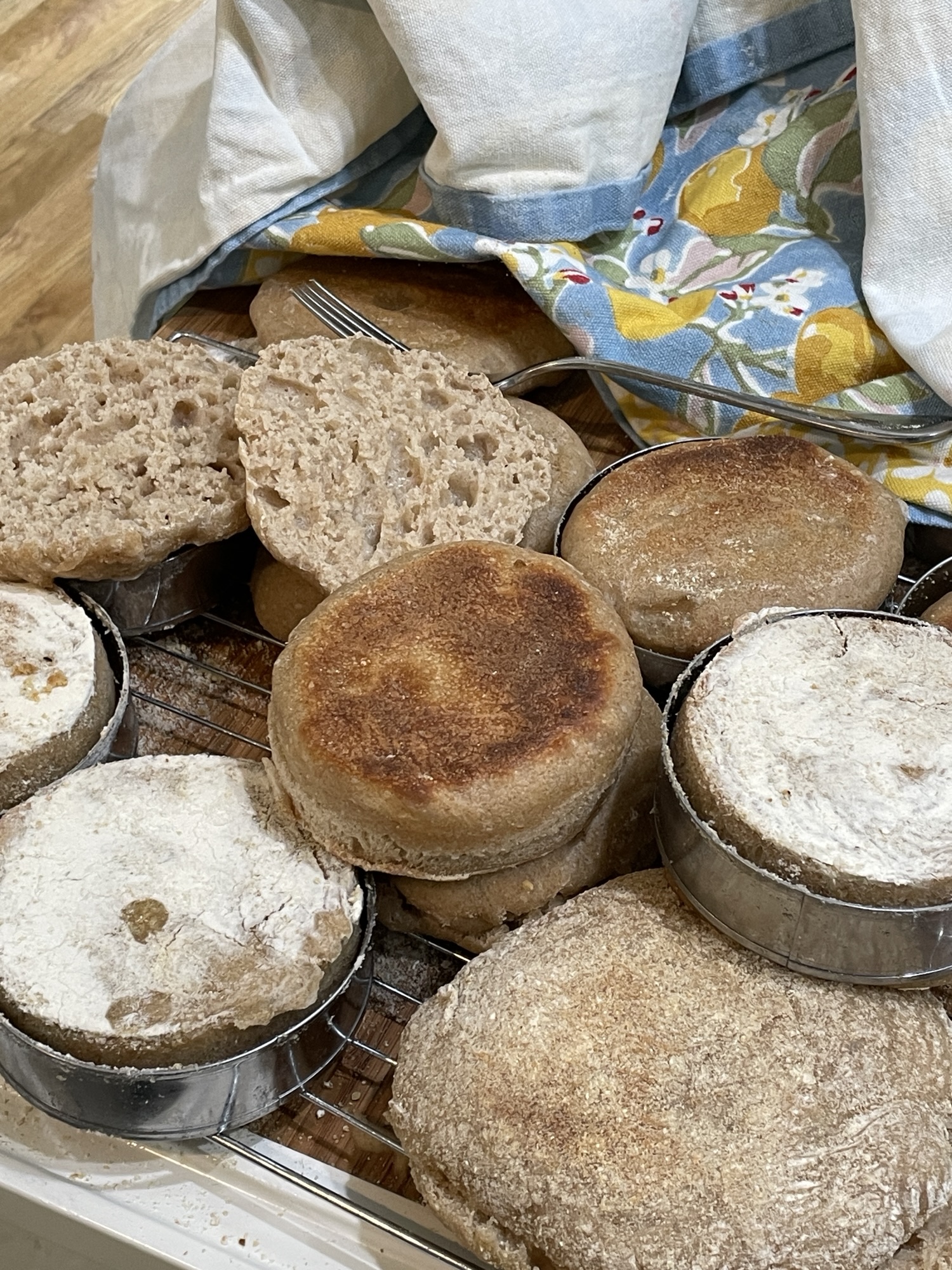
Also, there is nothing quite so satisfying as freshly baked bread.(Ooffer gluten free options as more ‘advanced’.) Every student should learn some version of “yeast management”- this is a way to have the sensation of personal power.
***
Even with the best education, teachers embody their own beliefs and experiences as well as their (subconscious) cultural ‘expectations’ as and when they choose from applying their typically undergraduate degree catechism into a lesson plan.
With that, they teach a sampling of their chosen field. They deliver a subject they packaged – or worse, bought one from someone else, to the best of their ability. From their ‘package’, they choose which parts of the books to open.
What your teacher is saying and doing as they impart their basic knowledge to innocent ears, is the product of many others’ thoughts and philosophies (like sand is a chip off the old block).
Not much of what a teacher says of does, is very original. In other words, what they’re telling you is (all) hearsay.
*
Some of this hearsay is very old and ancient-and reflects those authors “primitive” world understanding- with its minimal awareness of cause and effect and generational karma.
Primitive implies primal – first in a series. It is foundational – and according to primitive world view which was then a reality; perhaps a few hundred years ago. “Man against Nature”, ‘Peasant surviving despite nasty overlord’s rulership’, and stories of genocide – for whatever reason.
Such conditions gave focus and impetus for advances to make life “easier” and “better”, and that history might not repeat itself.
While each collective was spurred to develop their theories and practices, as problems, they are (now) approached separately due to the silo effect of people focusing on non(e)- sense specialty topics.
I propose we let go of all divisive subjects which add to our social silos (math, science, history, and art) and percussive and aggressive sports which bind expression of intelligence to external paradigms and parameters.
Once the feds made statistical “performance” contingent on receiving funds, with “No Child Left Behind”, teachers focus on children closer to the bottom – rather than the middle.
As long as a test is mandated and money is tied to a successful performance, they narrow down their teaching.
For public school budgets to support teaching abstract non(e)-sense like calculus, without it being directly applicable to essential and sustainable life skills, is wasting resources for the thriving middle – the communities backbone and future economic ‘dragons’.
Teachers do not know everything about anything (though they may want to). They shouldn’t be ‘judging’ a student other than to give them a badge signifying their adequate skill in a usable subject. Their judgements impair development of a child’s natural self-esteem.
By having demonstrable skills as the metric, more teachers will qualify to be helpful. After a student has ‘mastered’ that type of bread, or zipper, or fancy woodcut, they get a badge. And the adage, “see one”, “do one” “teach one” applies.
And when you can tutor, you can get paid for your time. You’ll have again more opportunities to enhance your life.
In the most effective atmospheres, distractions are minimized. In a conducive learning environment, you don’t have current events plastered as distractions. Given how deeply polarized our society, having polarizing “current” events to ‘discuss’, adds to chaos not clarity.
These events are completely out of control of a student’s (and their family’s) life; the content has nothing to do with school!
Lord knows, some parents get upset enough about politics and what constitutes as “science” and “history” in their homes- that bringing these topics up at school causes immediate emotional reactions (and cognitive shut downs).
For history taking, learn about the different collectives school has brought together and their elders’ experiences and lineage(s).
With that you’ll gain appreciation for each other- besides when you’re working together in the ‘souk’ community center(s).
So let walls be ~quiet without a lot of bold colors and big fonts. Instead place abstract dappled nature colors. in the most effective classroom atmospheres differences and polarities aren’t emphasized- so no gang or team colors.
Uniforms are helpful. Looking like one another, a student feels included visually.
*
Set up a giant globe to celebrate origins. Have monthly geographic themes for the advanced cooking, sewing and carpentry classes. Wear creations on Fridays.
**
For further individual enrichment, teach ‘observation’. Most scientific discoveries are based on observed ideas in nature anyway. Let kids make little stories or pictures about their ‘observations’. Bind the best into books to have in the school library.
Develop powers of imagination with ‘dream your future” exercises.
The first time I did it it was like starting a car in first gear – but I wanted an apple tree and stand of conifers which is what I have, 60 years later.
But children aren’t practiced at thinking about a five year plan (until now anyway), though consider it entering college as they decide on their major.
As a healthy exercise, that could be part of early school too – to practice visualizing one’s future!
**
Difficult classes affect a student’s aptness – and future aptitude in related subjects.
If they struggle to learn basic reading in first grade, or the teacher doesn’t seem to like them, or they are traumatized from being forced into school too soon, they may well struggle with (and detest) every book they are forced to read later. Here the ‘observational’ classes and stories will give a form of resilience.
On the other hand, students try to make a beloved teacher proud of them – and work harder even if a subject isn’t “second nature”.
In any case, it is worthwhile for a teacher to always spare another’s dignity and let them save face! Don’t ever give a “D” or “ F”; instead say, “needs remediation” or “more work”. And then, only if they want to do it.
(With the ‘souk’ (sweetness and success) community center, they can always pick up where they left off.)
Immigrant families are very sensitive to keeping their name clean and saving face – until they can’t. Then punishments roll downhill. Then the least powerful in the family are often most punished.
I’m guessing the answer to this conundrum will be in having a diversity of ‘helpers’ of all ages in a given classroom so no child feels unwelcome or behind- ask timid moms and macho dads to come to school once in a while to help out.
*
For those with specific personality preferences and convinced by strong family ideas of what schooling is “acceptable”, AI will be a useful tool.
With AI, they can get exactly the programming they desire. Let them be in charge. For the rest, AI will teach a language, refresh them how to do a certain dish, or seam closure, etc.
Regardless of barriers, students ultimately go into fields they’re naturally adept and interested, and avoid those in which they struggle.
*
When school is centered around essential activities that everyone can relate to – sewing (and textiles, patterning), cooking -from basic essentials to advanced cuisines (but still nothing like culinary school), carpentry (ditto), metal works, people will have more opportunity to be celebrated and inspired by each other as they start finishing projects.
That means more parties of all stripes.
The party industry thrives with births, deaths, sickness, weddings, retirements, graduations and B/Mitzvahs. Now we can add graduating from ‘souk’ collectives to it- supporting even more artists, bakers, musicians, and undecided people doing transitional waiting.
*
Use math, science, history, and art as applied to practical tangible subjects.
Artistry as a life skill will also flourish- and educe opportunity for individual expression (and get some “oohs and ahs”).
Students will gain from these skills because they’re useful, used and will give them power from their creations- like a horcrux and anchor a tangible proof of setting will into action.
Investing ourselves in our creations, culminating in products that have just a touch of teacher’s help, is evidence as a powerful trophy. Skills accrue and become second nature, instead of forgotten when the test is over.
(Despite my ~thousands of pleasant hours sitting in math lecture halls, I use none of it today so one could say I wasted my time and father’s money.)
*
Learning to move our bodies in a fluid way teaches self soothing. As we notice our breaths with movement, the body ‘knows’ it isn’t in fear or serious pain. You can’t be two places at once (technically). The latter can look like anxiety. It takes ~ a few minutes to reset; longer to re-calibrate.
For exercise, let there be gentle movements throughout class keeping to one’s 6 square foot cube and led by the most fidgety- along with the teacher who isn’t leading (unless the class wants them too).
Model them after traditional Chinese Tai Chi practices or ballet or “burpees” (the actual movements worshipers make doing prostrations in eastern temples- 5 times a day), maybe five times a day briefly is what we should be aiming for- but I’m not getting up for Fajr!).
With such a shift in education, you’ll discover who loves people, who loves to write, who’s the observer, and who’s handily creative, etc.
You’ll get to have award ceremonies, and, with continuation of said subjects in the ‘souk’ community learning center program, you’ll have a new reason for conventions and people will see what others can do.
Eventually these will become international. I’m really not kidding!!! Hotels and convention centers will be just as useful as they are now.
*
What better way to displace long held stereotypes? With such an approach, you’ll have more people able to do jobs they like to do and there will be healthier collectives intact with preserved traditions.
While not everyone will be good at everything, they’ll learn who they can go to (because those who excel will be wearing lots of those badges).
*
For those who have a different lived history even if through stories vicariously shared in the eyes of a sib or kin, they may feel blocked coming out of the gate. Without waiting for them to ask, offer them extra help. Make that be routine.
*
May this be helpful. All is Inshallah. or In shAllah.