(This is an updated essay. The original was published a few years ago when I had just finished shoveling after a spring snowfall. It is also meant to illustrate by metaphor how information lands on people. At the end of each section in brackets is some ‘3D’ interpretation. Naturally, there could be many interpretations – so please, if one comes to you – that’s ~correct too! And feel free to share with me (or keep it for your own!)
*
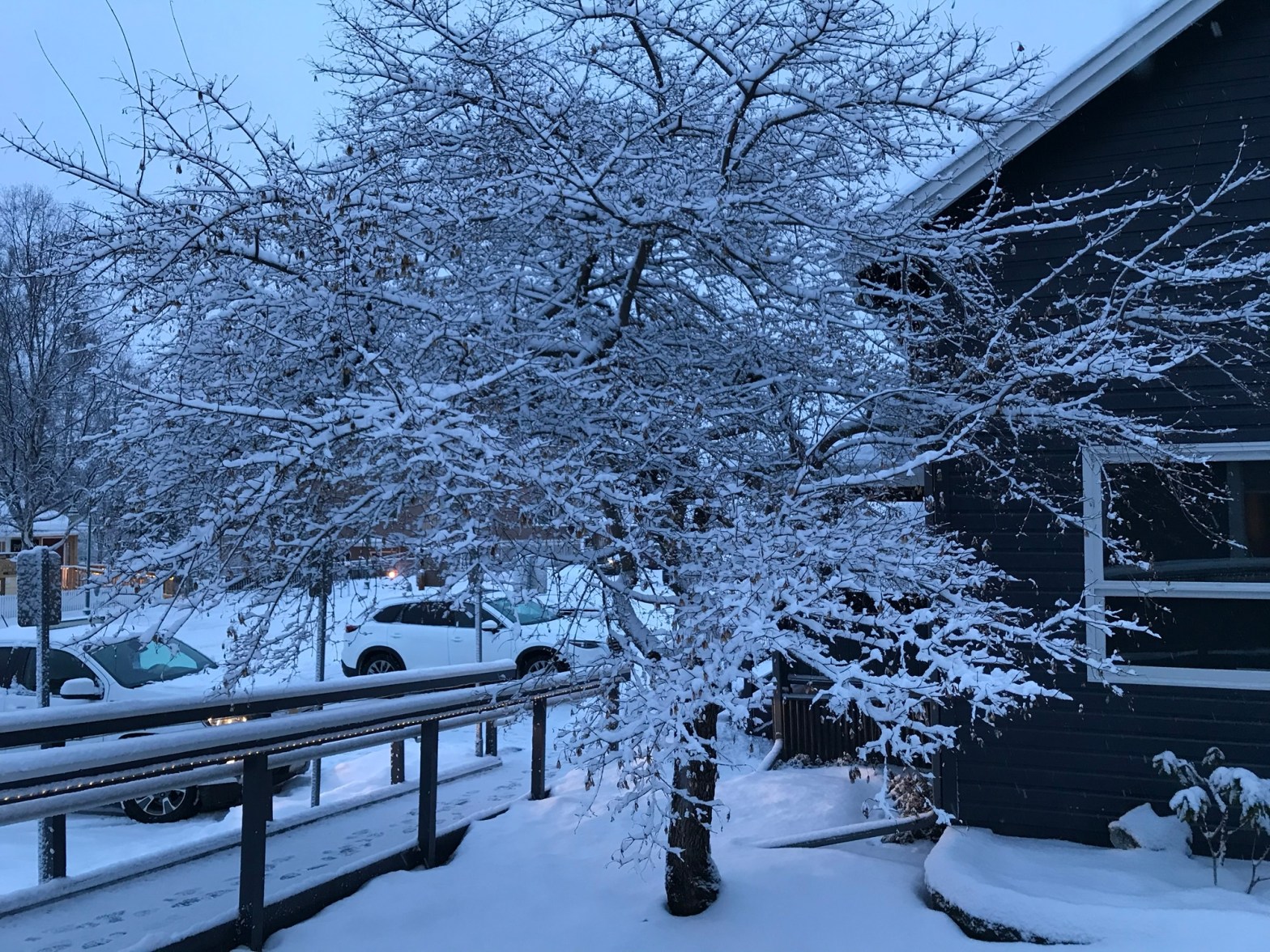
I love snow- even though winter isn’t always my favorite ‘season’.
Its fairy elegance fills the air with white as it gently descends.
Snow shifts my gears giving me a sensation of joy.
And covers the ground like a cozy white blanket that’s peaceful to my eyes.
My eyes are lulled by the lack of contrasts and no more sharp edges.
By the blended lighting, my mind is challenged to fill in the blanks.
Snow blends day into night and shadows are muted.
With gray sky days of low contrast,
my eyes rest from all the visibly sharp edges.
Nuance of a form is lost momentarily.
With a fresh snow scape, my breath calms, knowing I’ll go no where soon- at least not right now if I can help it or if I do, I’ll go slow.
Snow is as a gift from heaven- a descending aggregate from huge sky river and pockets.
Though like most words spoken, a snowflake’s ‘life’ is evanescent. In time, it will melt and sink into the ground – if not brushed or shoveled away.
Most but not all. Some flakes land right on my face and eyes – and then there’s a thrill. Melting then, leaving me a bit dew-faced, instead of dry and scratching like sand.
*
As the crisp air pinches my nostrils, it fills with smells of ozone and petrichlor.
Snow’s smell is described as clean and citrusy or floral. Of course those ‘scientists’ – used to reducing everything to a “perfect” system – instead of being observational, say snow is just water and “shouldn’t” smell like anything. Or maybe snow ‘has cleaned the air’ – leaving freshness behind. Most say it smells like something they like.
It smells even better when someone comes in from being outside wearing it like a cloak of freshness- because then I’m still warm and toasty. And, its aroma is mildly exciting.
So both slow and excited. Hmm, not many experiences can compete.
With snow outside I feel lightness within and I’m glad to be present.
Engaged, my inner intensity cools and thoughts slow from their unspooling. I let the snow distract me as it brings out my “childish” wonder.
When all is still and quiet, there’s a clean slate with only necessary paths and parking spaces.
In those moments I can imagine a new world- or try to.
What would still be there?
Pause for a moment and take time to imagine our pockets of dreams.
***
At the center of each snowflake is a tiny speck of finely milled sand – grit from eons of grinding refinement from what was once a piece of rock- a chip off the block, but worn away.
In this way, each speck comes from a lineage of ancient crystal in consolidation.
This is verifiable- look under the microscope and you’ll see rough rubies, sapphires, and miniscule diamonds mixed with quartz.
This grit is carried thousands of feet above the clouds to travel for hundreds, if not thousands of miles with earth’s prevailing winds. Statistically snow falling in North America is most likely seeded with sand from the Sahara.
While much lands in the Atlantic, some make it to far lands.
*
So it is dry crystals of Africa’s land, turned to snowflakes, now landing on my shoulders. Another way in which we are all connected.
That “old block” forms under its perfect conditions – an eon again – from which time shifts. Change one parameter of pressure, substrate concentration or temperature favors a different form- even if all other factors are the same. So even with similar outward appearances, may never again have the exact strata to end up the same way.
[Likewise, following another’s footsteps to a “T” won’t always create the same outcome and why cookbook lifestyles don’t always work.]
In the swirling Sirocco, sand particles mix with others of different mass and density. Some have more drag than others. Not all bodies in the cloud move evenly.
Lighter particles are readily swept up; heavier ones lag.
(Now consider microplastics – made mostly of carbon, they’re an order of magnitude lighter and travel even farther and higher. They create a banded lens affect and collect heat!)
As sand, entities of silica, carbon, and metal tumbles though the air, electrons bump and charge gets redistributed. Depending on the sand’s actual compound, which is usually silicate, but can be carborundum, corundum, and beryl. As a result, some ‘specks’ give up electrons more readily- others hold on to it. You could say they are forth giving depending on their density (and lineage).
As corners and tips are magnets for polar water vapor as it collects and coalesces along “rough” edges, each imperfection is not only extra area for water to land on but also for static electricity to build up.
[We don’t all share ourselves or information equally- even though we ascribe to ”transparency”. Denser bodies with just one or two electrons at a particular level- give these away more readily, than lighter elements of the same atomic group].
As water coats a surface, it changes a crystal’s moment of inertia. This affects its trajectory. Then snow swirls and floats as it falls towards the ground.
[Folks learn best when school gives them information they need and helps them smooth their rough edges.]
Frozen sand swirls through space, snowflakes grow from picking up more freezing water creating disk[ ]s and columns. As it enlarges, it gains in gravitas and falls under force of gravity. In time it descends through clouds losing altitude.
As it falls, snowflake gains in momentum until it reaches it’s terminal velocity. Then, its drag and, resistance to falling equals gravity’s pull, and it accelerates no more.
How the sand speck transforms to end up a symmetrical 6 sided pattern, seems miraculous. How do they create 6 ~ identical sides in a flat plane? How does it end up symmetrical? We think this, except it often doesn’t. In real life many snowflakes aren’t so beautiful.
When seeding densities crowd another’s pointed facets – each becomes slightly lop-sided and stunted.[ Teaching requires a fine line to engage emotions, and curiosity, but not swamp. Also, teaching would be more successful if students were engaged first hand instead of taught from books.
Using the metaphor of water to describe the effects of emotions, is apt. Emotions are generally corrosive to one’s inner sense of harmony. Not a bad thing necessarily, we need our rough edges smoothed and remodeling as only water can do – to gradually erode formed fixed (and false) beliefs.]. While it is tempting to think this is true for hu(e)-mans, it turns out there’s plenty of ‘water’ for everyone.
Like rain clouds releasing create a dark veil visible from far away, snow in clouds release similarly although instead of landing in sheets, it’s more a bank of fog moving in.
Sections of cloud release their watery baggage subject to local microclimates. Though we can’t see those finger-like protrusions, know they’re there – interspersed with lighter vapor surrounding them.
[So even if the ‘teacher’ snows you with too much information that seems confusing, some parts will land and make sense to someone.]
{Falling Snow}
AS snow falls, flakes dance. Some pirouette as they slowly float landward others fall more rapidly. Big fat ones form when snow’s a little warmer. When snow looks like that, soon there’ll be rain.
Heavier with humidity, then their trajectory is ~straight down until they become with earth reunited. Fine snow from very cold conditions, is often more persistent. THis takes longer to reach earth’s surface.
*
While falling, no sun, moon, or stars are visible. Nor are there shadows.
Filling the air with tiny white pixels, snow blurs margins and obscures horizons. Snows blends air with water; then boundaries soften.
Coating landmarks in drifts, details are lost and specifics disappear. Then it is easy to get disoriented. Even everyday places seem slightly vague and confusing.
[But maybe for e-ducing to happen in school a student must get a bit ‘disoriented’ from home. School, an ostensibly “safe space”, not only must release or at least ease homes’ anchors, as might happen when ‘out of their element’ and comfort zone.]
*
(the following is omitted in WP draft)
Snowflakes fall coming out of night’s blackness would be cool scene in a movie. Detailed snowflake closeups would take an expensive camera! And yet why not highlight individuals? Their excellence might be someone else’s catalyst.
(And why not make little films of each other- for posterity – and portfolio? But for everyone to do as part of rotating arts program?!]
*
You could also think of snow as frozen crystals of e-motions centered on an idea which starts out rough; or as flashes and shards of crystallized understanding and only mean something when they accumulate.
Like snowflakes are made of water around a crystalline seed core, words are constructs with consonants and vowels carrying inner meaning.
Words are heard by a heart after transmitted through ears and soma body. They are processed subjectively. Brain gets them ~last.
Words form sentences. Sentences heard when young are believed to be true- even if they’re a parent’s subjective opinion and/or simply overheard when a parent is angry. As a child has no subjective experience – so they can’t weigh them, you could say these sentiments are unfiltered. Such ideas stick to form the (subconscious) basis for fixed beliefs.
These ideas, along with the intention of said expressed thoughts (by parent), act as a prefilter to give meaning to child’s future subjective reality.
Later, thoughts register in one’s foundation of self when they feel relevant and important to one’s interests or path. So, they’re emotionally focused. IF they are of no relevance, they have no meaning- and slough off.
*
From one’s lineage- millennia of social and environmental conditioning, an “outsider’s” ideas, thoughts, and images imprint on soma variably.
Ideas filter through (only) after being engaged and focused emotionally – whether by aversion or craving.
Ideas and thoughts are further weighed and tested against one’s inner template – mom and dad’s belief system (including their body language). With that, concepts form.
*
Coming from home, where a being has ‘earned’ a version of status during their first five+ years of life, as well as how to communicate it, in school they’re immersed in a sea of unknowns. School is a completely different world than home. Classroom noise completely differs from intonations they learned in utero and later. The inner being can be terrified. For some, this is on top of ‘feeling rejected’ and cast out of the nest- especially boys that aren’t eager to go.
Being in school forces a student to ‘process’ in a second language- the language of school. Each must find their own definition of belonging.
They might even hear yet other (new-to-them) languages. Diversity adds another layer of complexity. How a student adapts reflects their underlying conditioning- and how comfortable they are with themselves already. Each mind is uniquely different.
*
Listening to a teacher as ideas and thoughts tumbe out of their mouth, one can feel snowed. Familial beliefs can be so thick, others’ points of view and truths are obscured.
Don’t force immersion. If a student has resistance, belied by their distracting/ or non-conforming behavior as agreed upon and depending on scenario, forcing them to attend breeds problems, whether expressed or not.
When you’re receptive and open to newness, you can listen more easily.
When snow is falling, sights and sounds are muffled. Then a teacher is like a sun or shining beacon. When I’m really hanging on to a teacher’s words or actions, I’m not paying attention to others’ distractions and can overlook them easily. I’m paying attention to the subject; not much bothered by emotional peccadilloes.
For that to happen though, there must be engagement. The student’s heart’s gotta be e-duced- and that’s through the eyes and ears.
(Don’t worry though, the universe has a way of showing us the way- life teachers show up at just the right time- when you not just want but ‘need’ them- as in you’re in a state of surrender.)
*
As snow falls, even when it’s noon with the sun overhead, a day seems like twilight. From whichever way the sun is shining, falling crystals reflect and refract. While there’s a glow in the air from dispersion, light isn’t getting through. Context is featureless. [While what we learn at each stage is valuable it all fits into a greater picture only our providence can know so it’s wise to cover all bases.]
(Pt. 2 and Pt. 3 are scheduled for tomorrow.)